Regis abandoned factory
The Outsider (Stephen King Edition)Regis abandoned factory is a ruined industrial building near Peaceful Rest Cemetery in Regis. First encountered as part of a barren landscape of disused infrastructure, it becomes a crucial investigative site when photographs taken by Holly Gibney lead authorities to bloody clothing associated with the murders of Amber and Jolene Howard and the identity of Heath Holmes.
Setting and appearance
The factory stands beyond a deserted railway station, abandoned storage facilities, and obsolete repair sheds. Its broken structure is overgrown with sunflowers and bushes, while a swastika has been painted on its crumbling pink brickwork, once red. Holly sees it from the cemetery parking lot, within a transitional belt of industrial decline near farm country. The surrounding landscape offers few conventional points of interest: the railway tracks are rusty and overgrown, a long-abandoned station has boarded windows, and two boxcars sit stranded among vines.
The site’s isolation is part of its narrative function. It lies beside other neglected places—including Peaceful Rest Cemetery and a deserted car wash—rather than within an active industrial district. The factory’s disuse and obscurity make it a fitting place for evidence to remain concealed, while its position among the cemetery, railway remains, and decaying businesses gives Holly’s investigation a concrete geography of abandonment.
Discovery and investigation
Holly photographs the factory during a visit to Peaceful Rest Cemetery, where Heath Holmes is buried with his parents. She later shows the images to the investigators, cycling through photographs of the train station, the factory, and the deserted car wash. The pictures turn a landscape she had examined alone into a lead that can be pursued by law enforcement.
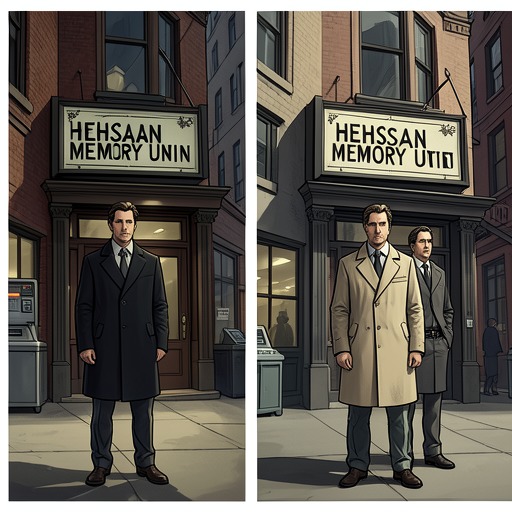
At Holly’s suggestion, deputies from the Montgomery County Sheriff's Office inspect the photographed locations. In the factory, they find a pile of bloody clothes. One item is an orderly’s jacket bearing a tag marked as property of the Heisman Memory Unit, connecting the clothing to the care facility where Holmes had been an orderly. Alec Pelley predicts that any fingerprints on the garments will belong to Holmes, though he allows that they may be blurred if Holmes had begun to change. Holly cautions that the investigators do not know how long that process takes or whether it proceeds the same way each time.
Evidentiary significance
The clothing offers a material link between the factory, the Heisman Memory Unit, and the Howard sisters’ deaths. Howie Gold expects that testing may show the blood came from one or both of the girls; at this stage, that is a prediction, not a reported laboratory result. Likewise, the expected fingerprints are not yet confirmed. The scene therefore advances the investigation while preserving uncertainty about what forensic analysis will establish.
The discovery also has an immediate jurisdictional consequence. The Montgomery County sheriff has questions about the find, but Lieutenant Yune Sablo says he has put the sheriff off and hopes to continue doing so. The factory thus becomes more than a hidden repository of evidence: it is where Holly’s reading of the abandoned landscape produces a lead with the potential to expose the investigators’ extraordinary theory to outside authorities.